Partnering for Impact: How CPPR is Helping Strengthen First Responder Mental Health in Rural Kansas
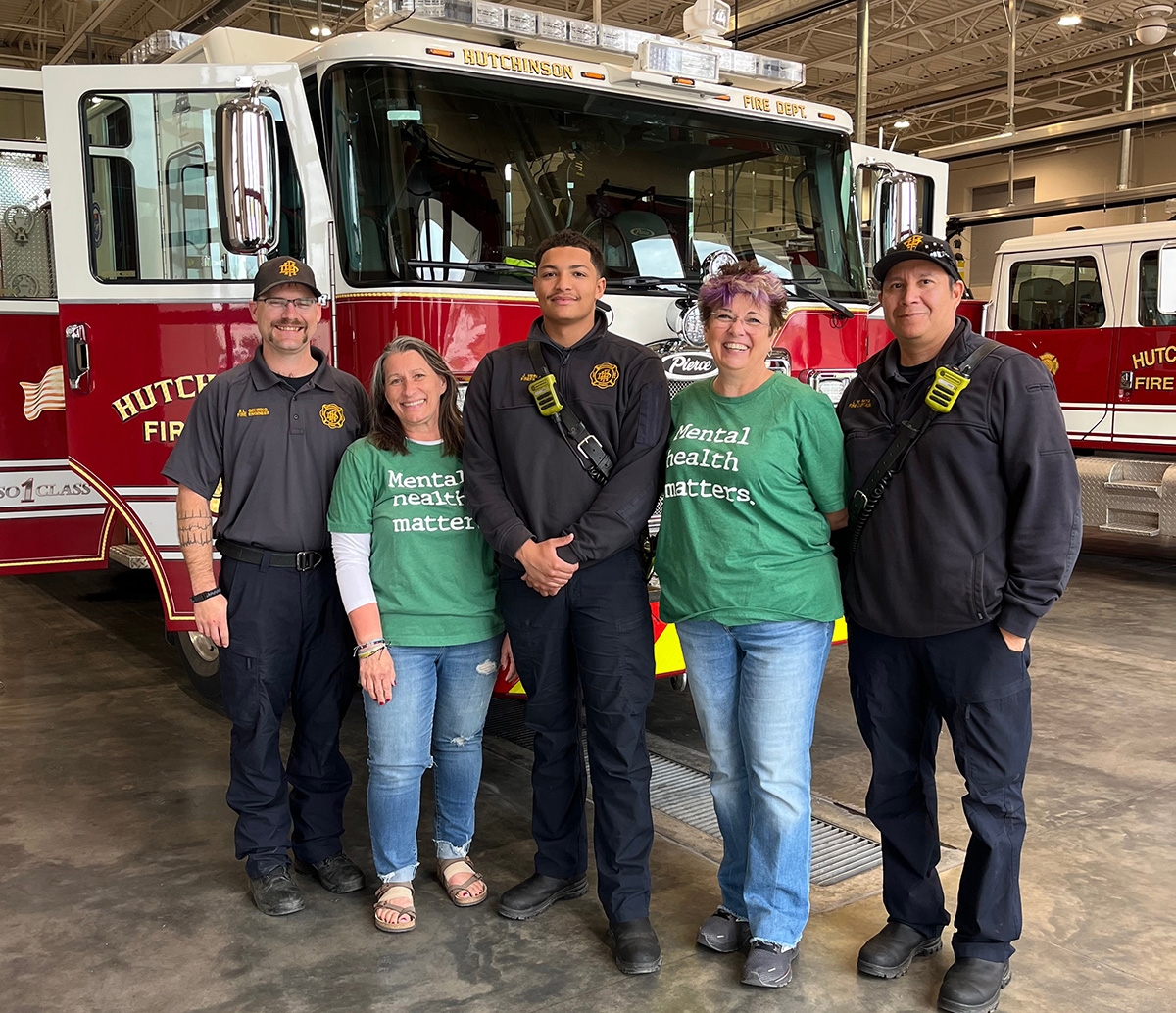
Across Kansas, Law enforcement officers, Firefighters, Emergency Medical Services (EMS) personnel, and other first responders increasingly encounter individuals struggling with mental health or substance use when responding to calls. The stress and trauma associated with this work can also impact their own mental health and is partially responsible for high rates of mental health diagnoses, including anxiety, PTSD, and depression, seen among first responders.
To help address these challenges, Horizons Mental Health Center launched an initiative to bring Mental Health First Aid to first responders across its five-county service area (Barber, Harper, Kingman, Pratt, and Reno counties). Mental Health First Aid is a nationally recognized, evidence-based training that equips participants to identify, understand, and respond to signs of mental health and substance use challenges, while also building skills to manage their own well-being and seek help when needed.
To strengthen and evaluate this work, Horizons partnered with the University of Kansas Center for Public Partnerships and Research (CPPR), supporting ongoing learning, program improvement, and documentation of impact.
Shifting Perspectives, Strengthening Response
Horizons faced some initial resistance from their intended audience. Beth Akins, Horizons’ Director of Communication, Education, & Engagement, explained, “The training needs of first responders are very diverse, and behavioral health isn’t always seen as a priority in their professional development.” It wasn’t long, however, before the training began to have an impact. As an EMS training captain explained, “I have been in EMS for 27 plus years, and when I first started you just didn't talk about the mental health part. Initially, when you started out these classes, they were kind of going, oh, mental health, you know, how's this gonna go? But by the end of it, I have only heard positive that they've learned things to take with them, and to put out there to help others. I cannot stress enough that you have done a wonderful job getting these firefighters to go from, ugh, mental health, to, being, in a way, excited about it, and knowing that they can take those tools and put them to use.”
Expanding Reach and Deepening Impact
Since late 2023, with support of a grant from the Substance Abuse and Mental Health Services Administration (SAMHSA), Horizons has now trained first responders in every county of their service area. Participants have shared that Mental Health First Aid has helped them during crisis calls and has also been helpful working with their colleagues. One responder explained, “We see our own people that we’re working alongside going through this as well. This has been very beneficial for us to be able to see those signs, to be able to help, and to know that you’re not alone. You’re not alone in this and we’re here to help you.” Horizons encouraged agencies to allow spouses to participate in training, which has also been seen as a valuable approach. A responder shared, “I think it helped [my spouse] understand better what we have to deal with on calls, what we could come back from, you know? She can see it on my face, and she can come in and talk to me and communicate better because she understands now.”
Adapting to Meet Community Needs
Much of Horizons success stems from the flexibility they adapted in working with small agencies across a large service area with unpredictable schedules. Horizons staff occasionally trained classes as small as five. They also adopted flexible approaches and held training across multiple sessions. As one agency training Captain explained, “We had a huge brush fire…and everyone had to get up and leave, and [Horizons staff] were both very supportive of going, okay, we’re going to come back…They were flexible in their schedule and willing to come out and work with us again.” Horizons also never treated MHFA training as “one-and-done,” but rather as an opportunity to develop strong relationships and build system capacity. One volunteer firefighter explained, “You did an awesome job in the training, and the biggest thing was, you know, giving your phone number out if we had any questions or needed help. That helped a lot. I bug her a lot.”
Horizons’ flexible, supportive approach has enabled them to train over 300 responders in fifteen agencies during the SAMHSA-funded project, with some of these agencies integrating Mental Health First Aid into their routine onboarding of staff. The training has also helped ensure people are connected to the resources they need, with direct referrals from first responder agencies to Horizons increasing every quarter since the project’s inception.
Building a Strong Evaluation Partnership
Horizons values its partnership with KU‑CPPR, recognizing the evaluation support as essential to the project’s success. Beth Akins explains, “CPPR has been invaluable in helping us collect and analyze project results, sharing those results with SAMHSA, helping us tell our story, and using this information to continuously improve the way we do our work.”
Chris Tilden, Associate Researcher Senior at CPPR, will present outcomes of this project, with Akins and Horizons First Responder Liaison Pat Willis, during a Forum at the Mental Health First Aid Summit at NatCon in Denver, Colorado, on April 26, 2026. Check out the conference presentation, including the PowerPoint and videos, to learn more about this work.